



Cortico is a patient engagement and clinic automation platform for primary care: online booking, reminders, intake forms, secure messaging, telehealth, payments and AI inbox automation, all wired into the EMR you already use. It is the alternative on this list built for family medicine and walk-in clinics rather than for large health systems, and it publishes its prices.
That said, Phreesia is the category leader for a reason, and the right answer depends on what you are trying to fix. Below is an honest look at five options: what each does genuinely well, and where each one stops.
Quick comparison
| Capability | Cortico | Phreesia | Luma Health | Weave | NexHealth |
|---|---|---|---|---|---|
| Best fit | Primary care, walk-in, small-to-mid clinics (CA + US) | Large practices, health systems, payer-facing intake | Mid-to-large practices and systems wanting orchestration | Small practices wanting phones + messaging in one place | Practices wanting scheduling/booking with EHR write-back |
| Public list pricing | Yes - $86 / $119 / $199 per provider per month | No - “customized to your organization”; quote via sales | No - no pricing page and no pricing link in the site navigation | Partly - “starting from $199 per month”; per-plan prices sit behind “Get Pricing” | No - “Tell us about your practice to get a quote” |
| Canadian EMR depth | Oscar 19, WELL OscarPro, Juno, Accuro, Flow, OpenOSP, Profile | No Canadian primary care EMR named among its listed integrations | No Canadian primary care EMR named among its listed integrations | No Canadian primary care EMR named on its site | No Canadian primary care EMR named among its listed systems |
| US EMR coverage relevant to independent clinics | Practice Fusion and NextGen Office (good), OpenEMR (good), Epic in progress | “16+ PM/EHRs natively” - Epic, athenahealth, eClinicalWorks, NextGen, Meditech, Oracle, Greenway, ModMed, AdvancedMD, Veradigm Connect and others | 8 named - Epic, Oracle Health, MEDITECH, NextGen, Nextech, eClinicalWorks, athenahealth, Greenway | Broad; dental, optometry and veterinary are the historical verticals, with Specialty Medical now second-largest | 70+ practice management systems; the list leads with dental (Dentrix, Eaglesoft, Curve, Open Dental) and includes Epic, athenahealth, NextGen Office |
| Phone system included | No | No - though Phreesia markets VoiceAI for after-hours calls | No | Yes - VoIP phones are the founding product | No |
| AI document triage (incoming faxes) | Yes - Elite plan or $85/provider/month add-on | Yes, inside referral management - transcribes paper and e-faxes into a referral hub | Yes - a “Fax Transform” module is named on the platform | Fax sending and receiving are included; no AI triage or auto-labelling is marketed | No fax product marketed |
| Self-check-in kiosk | Yes - $149/month first terminal, iPad $950 | Yes - the PhreesiaPad and the purpose-built Arrivals station | Yes - Intake for Tablet and Intake for Kiosk | Yes - Kiosk Mode inside Digital Forms, on any tablet | Yes - iPad Kiosk Mode |
| Public clinic directory that sends new patients | Yes - 94,000+ clinic listings in the Cortico network | Not marketed | Not marketed | Not marketed | No directory, but it does market new-patient acquisition through real-time booking on Google, Yelp and Facebook |
Every competitor cell above was checked against the vendor’s own website on 28 July 2026 (sources in the writer notes). Where a cell says a vendor does not offer something, that means we could not find it on their site that day, not that we have inside knowledge. Check with the vendor before you rely on it.
1. Cortico: deepest EMR write-back, and a patient network no engagement tool has
Cortico is built on the idea that the value is in the write-back, not the front end. Booking, forms, messages and payments are only useful if the result lands in the chart without anyone retyping it.
What that looks like in practice. Cortico pulls real provider availability out of the EMR in real time, so patients cannot double-book. Intake form responses flow into the workflow rather than into a PDF someone has to file. Patient-uploaded documents go straight to the e-chart (currently on OpenOSP and WELL OscarPro). Preferred pharmacy selections sync back to the EMR. The kiosk pushes live check-in status to the EMR. And a Chrome/Firefox plug-in puts secure messaging, video calls, health card validation and e-form sending inside the EMR screen staff already have open. There is a free open-source version of it.
EMR coverage, at true depth. Cortico rates its own integrations honestly:
- Excellent (COMPLETE+): WELL OscarPro (including KAI and THT), Flow EMR, OpenOSP / OpenOscar
- Excellent with minor differences (COMPLETE): Accuro, Juno EMR, Oscar 19
- Good, missing some small features: NextGen Office, Practice Fusion, OpenEMR, MPeer, Profile (Intrahealth)
- In progress: PS Suite, MedAccess, Epic, Myle
If you run Oscar, Juno or Accuro in Canada, or Practice Fusion or NextGen Office in the US, this is the practical difference between a tool that reads your schedule and one that writes to your chart. See the full list of EMR integrations.
Automation breadth. Cortico automates up to 90% of routine admin tasks, and takes reminders and confirmations off the front desk entirely. One clinic cut overhead from $7 to $3 per appointment. The AI add-on goes further than reminders: Intrepid Health booked 1,500 follow-up appointments in a single month using the Automated Task Manager, and document triaging labels each incoming fax with patient name, ordering doctor, consult date and category automatically. The kiosk cuts MOA check-in workload by up to 95%. For specialists, Request to Book automates up to 85% of appointment scheduling by sending a targeted booking link instead of playing phone tag. That breadth is what we mean by medical workflow automation rather than patient messaging. For the fuller category picture — what belongs in a complete patient engagement platform beyond simple messaging — see our 2026 patient engagement software review.
A recruitment channel, not just an engagement tool. Every other product on this page helps you communicate with patients you already have. Cortico also operates a public network of 94,000+ clinic listings that helps patients find clinics, so it works on patient acquisition, not only retention. None of the four US platforms above markets a patient-facing clinic directory; the closest is NexHealth, which offers real-time booking through Google, Yelp and Facebook rather than a network of its own.
Transparent pricing. Essentials is $86 per provider per month, Premium $119, Elite $199, with a $99 monthly minimum. Add-ons are published too: AI inbox and task automation at $85/provider/month, kiosk at $149/month for the first terminal, mass email at $0.0025 per message. Full detail on Cortico’s pricing page.
Security. SOC 2 Type 2 and ISO 27001 certified; HIPAA, PHIPA, PIPEDA and PIPA compliant; verified under Ontario Health’s Virtual Visits Verification Program; reviewed by the BC Privacy Commissioner with recommendations implemented.
Where Cortico is not the answer. If you are a US health system that needs payer-sponsored intake, eligibility and benefits verification at enterprise scale, Phreesia does that and Cortico does not. If you want your phone system replaced, look at Weave. And if you run an EMR in the waitlist tier - Cerner/Oracle Health, Meditech, Veradigm - Cortico cannot integrate today.
Book a demo and we will show you the write-back in your own EMR.
2. Luma Health: strong orchestration for larger practices
Luma Health now calls itself “Operational AI for Healthcare” and organises the product into four areas - Agentic Access, Agentic Engagement, Agentic Intake and Agentic Payments - with named modules including Scheduling, Referrals, Waitlist, Reminders & Recalls and Fax Transform. That is a real orchestration layer rather than a reminder tool, and for a mid-to-large practice with messy referral and recall workflows it is genuinely capable.
Where it falls short for our readers: pricing is not published - lumahealth.io has no pricing page and no pricing link in its navigation - and the EHRs it names are all US enterprise systems: Epic, Oracle Health, MEDITECH, NextGen, Nextech, eClinicalWorks, athenahealth and Greenway. No Canadian primary care EMR appears on the list. If you run Oscar, Juno or Accuro, ask hard integration questions early.
3. Weave: phone-centric workflows
While Cortico has a track record of retiring the phone and moving patients to digital workflows, Weave embraces it. Weave’s core is a VoIP phone system, with texting and email, scheduling, payments, reviews and AI call tools layered on top. If your front desk is drowning in calls and you were going to replace your phone system anyway, Weave consolidates two purchases into one. It is also the only vendor here that publishes any number at all: its pricing page says plans start from $199 per month, though the individual tier prices still require a sales conversation.
The trade-off is depth in the chart. Weave is strongest as a communications layer around the practice rather than an EMR-native automation platform. Its own annual report describes a company that began in 2008 in dental and expanded into optometry in 2015 and veterinary in 2018; Specialty Medical - 29 specialties, including primary care - is now its second-largest and fastest-growing vertical, which tells you primary care is a newer motion for them rather than the founding one. Weave’s own CEO, Brett White, put the integration point plainly on the company’s Q3 2025 earnings call: “Integrated Weave is more valuable to our customers. So it has a higher ASP, and it has a higher retention rate.” So if you need intake data and uploaded documents to land in a primary care chart automatically, ask exactly what their integration writes for your EMR before buying.
4. NexHealth: booking and write-back, mostly for dental
NexHealth built its reputation on a synchronization layer - it still calls the technology the “NexHealth Synchronizer” and sells a Health Records API to developers - that reads and writes to practice management systems. That is the right architectural instinct and the same one Cortico follows. Around it sit online booking, automated reminders, digital forms, payments, insurance verification, messaging, reviews and waitlist automation, and it claims support for 70+ practice management systems.
The caveat is market fit. NexHealth serves both medical and dental practices, but its published integration list leads with dental systems - Dentrix, Eaglesoft, Curve Dental, Open Dental - which is where its centre of gravity has been. Pricing is quote-only: the pricing page asks you to “tell us about your practice to get a quote” and shows no figures. For a Canadian family practice on Oscar or Juno, coverage is the first question to ask, since no Canadian primary care EMR appears on that list.
5. Phreesia: when staying put is the right call
Phreesia is the category leader in patient intake, and it earned that. At health-system scale its intake, registration and payer-facing workflows are more mature than anything a smaller vendor offers. Its in-office hardware - the PhreesiaPad, and the purpose-built Arrivals self-service station - is the product most people picture when they think “digital intake”. And it is a public company (NYSE: PHR) with the stability that implies: fiscal 2026 revenue was $480.6 million, up 14% year over year, its first full year of positive net income, serving an average of 4,658 healthcare services clients in the fourth quarter.
Stay with Phreesia if you are a large US organization whose intake problem is really an eligibility, benefits and payments problem. Look elsewhere if you are an independent clinic that finds the price hard to predict, needs Canadian EMR support, or wants back-office automation across the whole clinic rather than concentrated around intake, referrals and payments.
Phreesia alternatives in Canada
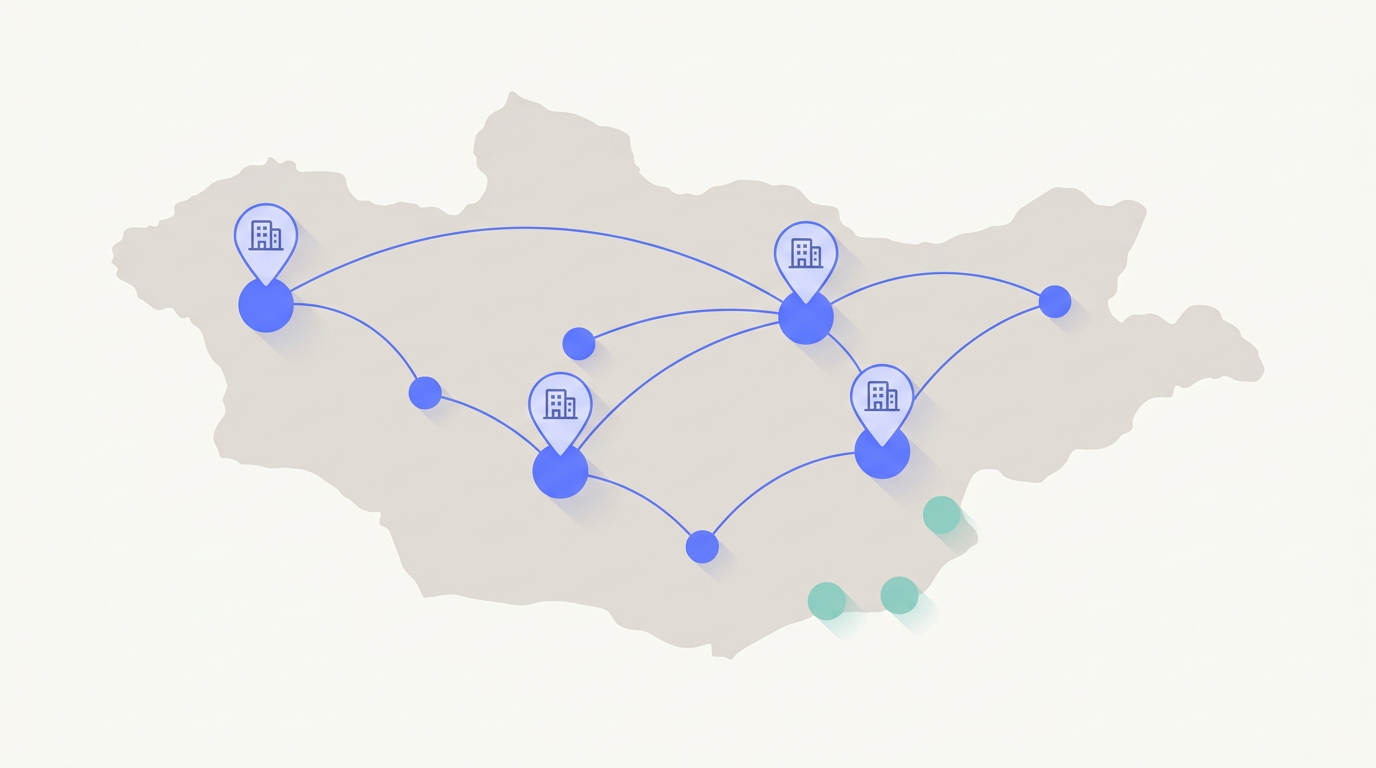
Canadian buyers face a smaller field, because most US patient engagement vendors do not integrate with Canadian primary care EMRs.
- Ocean (OceanMD): owned by WELL Health Technologies, and now branded “A WELLSTAR Company”. Ocean calls itself “Canada’s digital gateway for healthcare” and splits its product into a Patient Engagement Suite (booking, messaging, reminders, check-in kiosks, self-serve forms) and the Ocean Provider Network (eReferrals, eConsults, eSubmissions, eOrders). It reports 50,000+ users and 170,000+ eReferrals a month, and names four integrated EMRs: PS-Suite, Med Access, Accuro and Oscar Pro. Consider it first if your pain is referrals.
- Mikata Health: Canadian, bilingual English/French, and now positioned as “the all-in-one AI clinic assistant”. Its named products go well past reminders: AI clinical documentation, referrals and forms, coding and billing, patient triage, booking, intake, follow-up, secure messaging, campaigns and check-in. It says it is “integrated with the biggest EMRs in Canada” but does not name them on its site, and it does not publish prices, so ask for both.
- Pomelo Health: Canadian (formerly Chronometriq, founded 2012), with online booking, reminders, secure messaging, mobile check-in, e-forms, telemedicine, broadcast messaging and a queue-management system for urgent care. Its distinctive track record is mass-booking at scale for pharmacy banners and provincial health authorities: vaccination and testing campaigns rather than day-to-day family practice. Note that pomelohealth.com is the Canadian company; Pomelo Care is an unrelated US business.
Cortico’s Canadian position is the EMR list: Oscar 19 and WELL OscarPro, Juno and Accuro are all rated COMPLETE or better, and Flow EMR and OpenOSP are COMPLETE+.
Phreesia pricing: what is actually public
Searchers looking for “Phreesia pricing” usually find the same thing we did. Phreesia has a pricing page, but it carries no numbers. It says pricing “is customized to your organization based on factors like your size, workflows and the products you use,” and points you at a demo to get a tailored quote. That was still true when we checked on 28 July 2026. Reported costs vary widely by practice size and module mix, and we are not going to quote a number we cannot source.
What we can do is work backwards from Phreesia’s own public filings. In fiscal 2026 Phreesia booked $219.5 million of subscription and related services revenue across an average of 4,514 healthcare services clients. That is about $48,600 per client per year, or roughly $4,050 a month, before the payment-processing and network-solutions revenue that makes up the other $261 million. Read that as an order of magnitude, not a quote. Phreesia’s client base skews to large multi-provider organizations, so a per-client average is not a per-provider price, and your own number could sit well above or below it. The point is the contrast: you can see Cortico’s per-provider price on our website before you talk to anyone.
That opacity is a real evaluation cost. You cannot compare two vendors on price when only one of them will tell you the price before a discovery call. For contrast, Cortico’s is on the page: $86, $119 or $199 per provider per month, $99 minimum, add-ons listed individually. Most years prices do not change; when they do, customers get a year’s notice and have historically been grandfathered, and a rate lock is available on request.
How to choose
- Start with your EMR. Ask each vendor to name your EMR and describe exactly what writes back to the chart. Vague answers here predict painful implementations.
- Separate intake from automation. Digital forms are table stakes. Ask what happens to faxes, follow-ups and recalls, because that is where the staff hours actually go. For a deeper look at how the intake category itself has evolved, see our 2026 patient intake software review.
- Get a price before the demo. If a vendor will not indicate a range, budget extra time for procurement.
- Count the tools you would retire. A platform that replaces booking, reminders, forms, messaging, video and payments is a different calculation than a point solution.
Want to see it against your own schedule and EMR? Book a demo.
Related reading: patient engagement software, patient intake software, and secure patient messaging.
